The Watchtowers:
Guarding the Civic Ledger in 2026.
We are not launching an attack campaign. We are launching a people-first civic story to repair the machinery of the fog.
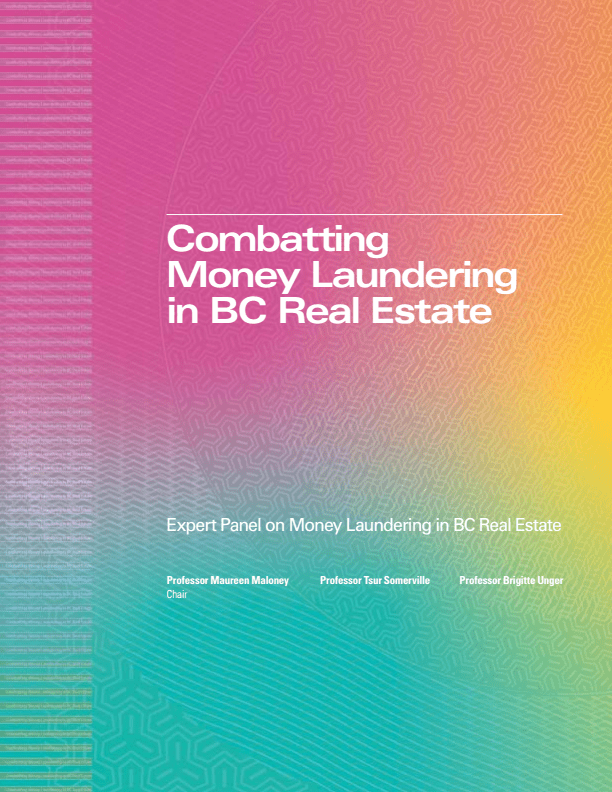
In 2019, the Expert Panel on Money Laundering in BC Real Estate published a landmark report. Authored by Professors Maureen Maloney, Tsur Somerville, and Brigitte Unger, the document proved what ordinary Vancouverites already felt in their bones: billions of dollars in illicit global capital were distorting our local housing market.
Where are those authors today? They remain respected academics (at SFU, UBC Sauder, and Utrecht University). But the crisis they documented has mutated. Today, in 2026, the primary threat to Vancouver’s livability isn’t just illicit money laundering in the shadows—it is the legalized, institutionalized speculation driven by top-down zoning mandates.
As Professor Patrick Condon notes in his “Broken City” thesis, blindly upzoning land without capturing the financial lift for public benefit doesn’t build affordable housing. It just pours speculative gasoline on the fire.
If we want to fix this, we have to ask: Who is watching the city? Who are the “Watchtowers” guarding our civic ledger, and what are their strengths and vulnerabilities?
The Watchtowers: A SWOT Analysis
To course-correct in 2026, the Electors Action Movement (TEAM) must utilize and protect three distinct civic Watchtowers.
1. The Institutional Watchtower: The Independent Auditor General
Championed heavily by TEAM, Mike Macdonell’s Office of the Auditor General (OAG) was established to audit City Hall finances, stop wasteful spending, and enforce public transparency. In 2024, they launched the Whistleblower program.
2. The Academic Sentinels: The Data-Driven Experts
Thinkers like Patrick Condon, David Ley, and the original 2019 Maloney panel authors. They possess the historical and economic data proving that “supply-and-demand” trickle-down economics does not work in a globally hyper-commodified land market.
3. The Civic Grassroots: The Missing Voices
This includes neighborhood groups, the Local Focus Network, the Westside Community Housing Committee (CHC), and ordinary residents demanding sensible co-op housing and infrastructure-first planning.
What We Must Improve (And What Is Great)
What is Great: The infrastructure for transparency exists. The OAG is producing brilliant reports. Community networks like Local Focus are gathering momentum. The intellectual framework for a livable city is fully developed.
What Needs to Improve: The culture of “The Organization.” We must shatter the Black Box. We cannot rely on online-only surveys that disenfranchise seniors and ESL residents. We must end the practice of holding high-priced, exclusionary conferences that dictate the future of “Missing Middle” housing without inviting the middle class (or the experts) to the table.
Why the Electors Action Movement (TEAM) Will Do Something Different in 2026
We are not running an attack campaign. Anger is easy, but it does not fix budgets. We are deploying a public-interest witnessing project.
We use Reverse Reading: we start with the public’s question, map the claims, and work backward into the voting records to find the truth. We utilize our Deeds Not Words AI Notebook to compare political rhetoric against actual Council voting receipts.
TEAM believes in The Family Question. We do not destroy the family home to build the city; we manage growth to protect the community. This means restoring participatory planning, reigning in runaway Community Amenity Contribution (CAC) dependency, and supporting true non-market, cooperative housing.
It is time to course-correct.