
We are not launching an attack campaign. We are launching a people-first civic story.
It was a defining week for Vancouver’s civic future. On May 6, the Local Focus Network talk series hosted UBC urban design professor Patrick Condon. Two days later, on May 8, the Missing Middle Conference (themmc.ca) gathered the “experts”.
Together, these two events operated like a diagnostic clinic for a broken city. They exposed a hard truth: the “Black Box” of top-down planning is back, and it has hijacked the language of affordability.
Patrick Condon has become one of the most relentless, data-driven critics of Vancouver’s speculative housing machinery. At the Local Focus Network talk, the economic reality of City Hall’s current path was laid bare.
A crucial question was put to Condon that cuts right through the bureaucratic fog:
Condon’s response grounded the room in reality. He pointed out what the planners inside the Black Box refuse to admit: blanket density without public accountability does not create affordability. It inflates land values and creates displacement. It treats Vancouver as a global financial commodity rather than a collection of living, breathing family neighbourhoods.
Before the night ended, I stepped to the microphone to ask Professor Condon a direct question regarding the upcoming Missing Middle Coalition (themmc.ca) conference—a gathering featuring city councillors and former politicians.
The greatest irony of it all? Patrick Condon—the city’s foremost academic voice warning against this speculative fire—was not invited to the table.
And we should also wonder why the mainstream media are slow to openly report on this glaring exclusion. How can we trust a conference about housing the middle class when the leading critical voice is purposely left off the guest list?
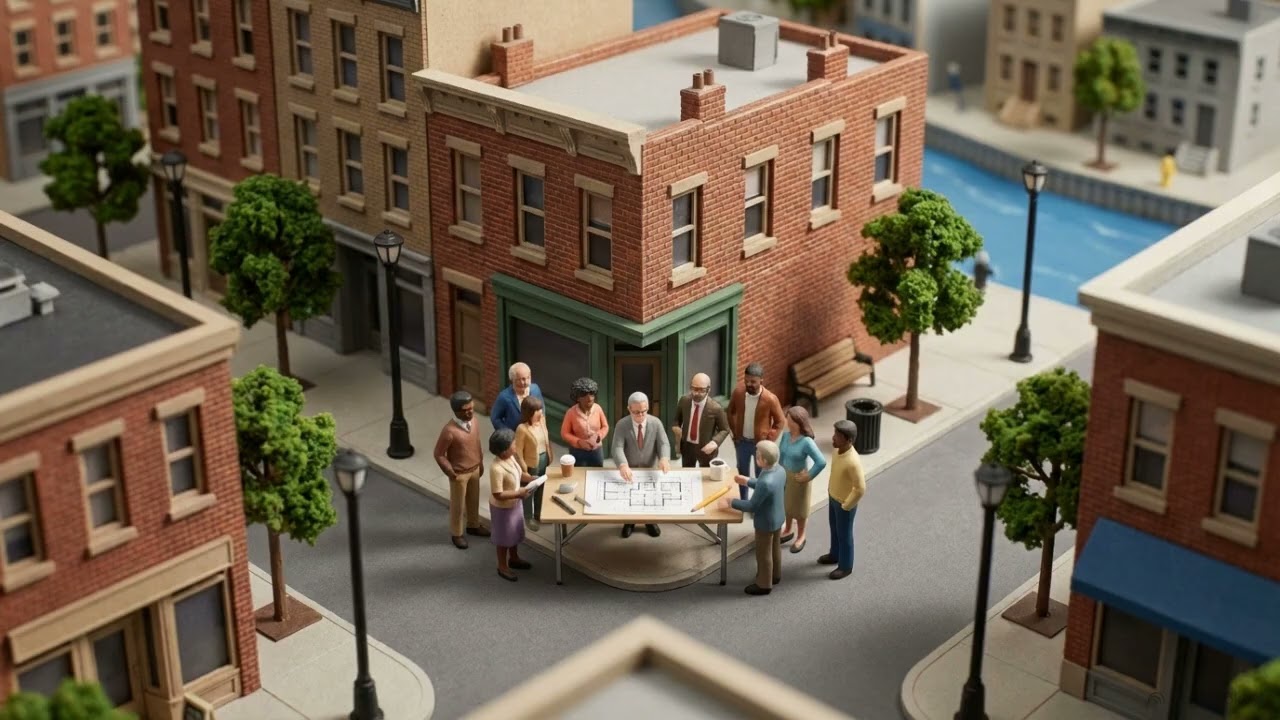
Two days later, the event hosted by themmc.ca brought this technical critique down to the street level. When housing policy is discussed, we must ask: who is missing from the room?
They all live with the consequences. But too often, they are left outside the language. Outside the machinery. Outside the room.
When analyzing the Missing Middle Coalition conference and the controversial Official Development Plan (ODP) it was debating, we have to look closely at the tone and the language. What did the conference reveal? Was affordability actually defined by local wages? Were co-ops and non-market housing treated seriously? Were residents part of the solution, or mostly managed from above?
Originally, “Missing Middle” meant something beautiful: gentle, livable, affordable housing for working families. But the phrase was hijacked to justify a top-down, blanket-zoning mandate that dismantles neighbourhood character without actually housing the middle class. When people are told that “more supply” alone will magically solve affordability, they are being sold a profound systemic illusion.
I do not want this observation to be negative or partisan. The deeper question is human.
That is how many residents feel when planning is done over their heads. They are not anti-housing. They want to be asked. They want to be shown the numbers. They want to be treated as people.
In the late 1960s, a grassroots movement, led by figures like Mike Harcourt and the original founders of TEAM, stopped a concrete freeway from destroying Strathcona and Chinatown. They established a fundamental Vancouver ethos: You cannot change the city without asking the people who live in it first.
Today, the silent bulldozers are opaque zoning mandates. To combat this “New Freeway,” we are launching a public-interest witnessing project. We are introducing two critical layers of research and education:
The events of May 6 and May 8 proved that the experts and the grassroots both know the current system is broken. Now, we must organize and demand that City Hall Ask Us First.

TheOpenGov.com 2026